>Corresponding Author : Kari Guffey
>Article Type : Mini Review
>Volume : 3 | Issue : 1
>Received Date : 19 May, 2026
>Accepted Date : 29 May, 2026
>Published Date : 02 June, 2026
>DOI : https://doi.org/10.54289/JPPC2600103
>Citation : Azotam A and Guffey K. (2026) Rolling Risk: Education and Toolkit Development for Pediatric Providers Surrounding Pediatric Traumatic Brain Injuries from Golf Cart Use in Suburban Communities 3(1): doi https://doi.org/10.54289/JPPC2600103
>Copyright : © 2026 Azotam A, et al. This is an open-access article distributed under the terms of the Creative Commons Attribution License, which permits unrestricted use, distribution, and reproduction in any medium, provided the original author and source are credited.
Mini Review | Open Access | Full Text
Baylor University Louise Herrington School of Nursing, 333 North Washington Avenue, Dallas
*Corresponding author: Kari Guffey, Baylor University Louise Herrington School of Nursing, 333 North Washington Avenue, Dallas
Abstract
Pediatric traumatic brain injuries (TBI) remain a leading cause of medical visits in the United States, accounting for over half a million emergency department visits, 60,000 -95,000 hospitalizations and thousands of deaths annually. Recognition of the risk to children and causes of these injuries is imperative to target appropriate preventative education and remain informed. Golf cart sales have surged by over 400% in the past five years, with increasing use in residential neighborhoods, vacation resorts, and beach communities. Despite their popularity, golf carts often lack basic safety features such as seatbelts and are frequently operated by or around children without adequate supervision. These vehicles are not designed for rapid maneuvers and are vulnerable to rollovers and collisions, especially when sharing roads with larger vehicles. Pediatric injuries typically result from ejection, overturning, or vehicular impact, with skull fractures and intracranial hemorrhages being the most common outcomes. Aside from lack of education surrounding the risk of golf carts, there are no recommendations focused on screening for the risk of golf cart injury. This practice initiative identified knowledge and practice gaps and focused on development of a toolkit for pediatric providers. This toolkit allows for screening, education and awareness of the risks associated with the increasing access and usage of residential golf carts.
Keywords: Traumatic Brain Injury, Golf Carts and Children, Head Trauma
Abbreviations: TBI: Traumatic Brain Injuries, NEISS: National Electronic Injury Surveillance System, KTA: Knowledge-To-Action, CFIR: Consolidated Framework for Implementation Research, ATV: All-Terrain Vehicles
Rolling Risk: Pediatric Traumatic Brain Injuries from Golf Cart Use in Suburban Communities
Golf carts were originally designed to support mobility on golf courses; however, their use has expanded substantially over the past several decades. Today, golf carts serve as routine modes of transportation in suburban neighborhoods, resort and beach communities, gated developments, college campuses, sporting venues, hospitals, and airports. In many residential settings, golf carts are marketed as convenient, family-friendly alternatives to passenger vehicles. Despite this expanded use, golf carts are frequently not equipped with safety features comparable to automobiles, such as three-point seat belts, child-appropriate restraints, doors, or structural protection. In addition, many golf carts are modified to increase speed and power, further elevating injury risk.
Although children often drive or sit in the front seat of golf carts, there remains a notable lack of standardized screening tools, anticipatory guidance, and educational resources available to pediatric healthcare providers. Consequently, caregivers may underestimate the potential severity of golf cart–related injuries, particularly traumatic brain injury (TBI), and opportunities for primary prevention during routine pediatric encounters are frequently missed. Addressing this gap requires a structured, evidence-based approach that translates emerging injury epidemiology into actionable clinical practice.
Background and Review of Literature
National injury surveillance data indicate that golf cart–related injuries represent a growing public health concern. Early analyses identified nearly 150,000 golf cart–related injuries in the United States between 1990 and 2006, with injury rates more than doubling during that period [1]. More recent National Electronic Injury Surveillance System (NEISS) studies demonstrate that this upward trend has continued and accelerated, with more than 63,000 pediatric golf cart–related injuries reported between 2010 and 2019 and annual estimates exceeding 6,500 injuries in recent years, the majority occurring among children younger than 12 years [2-4].
Pediatric TBI remains a leading cause of morbidity and emergency department utilization among children in the United States [5,6]. While injury-prevention initiatives have historically focused on motor vehicles and all-terrain vehicles, accumulating evidence demonstrates that golf carts constitute an increasingly prevalent and underrecognized source of pediatric neurologic injury [7,8]. Trauma registry and surveillance studies consistently show that children experience disproportionately high rates of head and neck injury, skull fracture, intracranial hemorrhage, and spinal trauma following golf cart incidents [9,10].
Neurosurgical literature further underscores the severity of golf cart–related injuries in pediatric populations. Case series have demonstrated that children and adolescents comprise a substantial proportion of patients requiring neurosurgical evaluation following golf cart accidents. Ejection from the cart represents the dominant mechanism of injury and a sizable proportion of patients require intensive care admission and prolonged hospitalization [10].
Across the literature, the mechanisms most consistently associated with severe injury include passenger ejection, rollover events, sharp cornering, and ineffective restraint systems [7,8,11]. Seat belt use among injured children remains exceedingly low—consistently below 10%—and the two‑point lap restraints or hip bars commonly used in golf carts are poorly suited to pediatric anatomical proportions. As a result, these restraint systems frequently fail to prevent passenger ejection and may, in some cases, increase the risk of head‑first impact [9,12].
Despite the well‑documented burden and preventability of pediatric golf cart–related injuries, anticipatory guidance on golf cart safety is not routinely incorporated into pediatric primary care [9,12,13]. Notably, children are most often injured as passengers rather than drivers, underscoring that age‑based licensing regulations alone are insufficient to reduce injury risk. Evidence from injury‑prevention research indicates that sustained reductions in pediatric injury rates require coordinated strategies that integrate clinical screening and caregiver education with broader community‑ and policy‑level safety initiatives [13].
Given the increasing incidence of pediatric golf cart–related TBI, the prevalence of modifiable risk factors, and the lack of structured guidance in clinical settings, there is a clear need for an evidence-based, implementation-focused prevention strategy [3,4,9,12,14]. To address this gap, this project focused on the systematic development of a brief screening and counseling toolkit designed to facilitate timely identification of risk and delivery of targeted education during routine pediatric encounters. The following Methods section describes the conceptual framework guiding this work, the processes used to develop and refine the screening and counseling instruments, and the planned strategies for evaluation and implementation.
Methods
This evidence-based practice project employed a pre-implementation design focused on development of a pediatric golf cart injury prevention toolkit guided by the Knowledge-toAction Framework (Figure 1). This project seeks to translate current epidemiologic and clinical evidence into practical screening and counseling tools that support pediatric providers in delivering timely, effective anticipatory guidance during routine care. This phase emphasized rigorous development and preparation of screening and counseling instruments for pilot testing rather than evaluation of clinical outcomes. The toolkit was designed for use during pediatric primary care encounters, including well-child visits and sports physicals. Toolkit development followed best practices for pragmatic screening instruments, including theory-informed item generation, iterative content refinement, and alignment with clinical workflows [15,16].
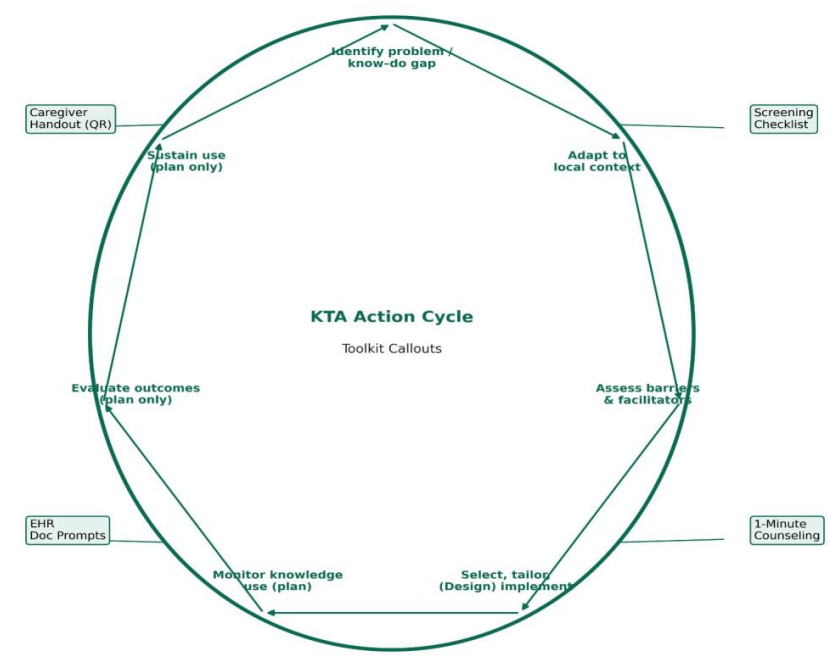
Figure 1. KTA Cycle
Knowledge-to-Action (KTA) action cycle demonstrating translation of evidence into a pediatric golf cart injury prevention toolkit. The cycle highlights identification of the knowledge-to-practice gap, adaptation through screening and brief counseling, and planned strategies for monitoring, evaluation, and sustainment supported by electronic health record prompts and caregiver education.
Conceptual and Implementation Framework
The Knowledge-to-Action (KTA) Framework guided the development of this evidencebased practice project, which aimed to create and prepare a brief, implementation-ready golf cart risk screening, and counseling toolkit for pediatric primary care. The KTA framework provides a practical structure for translating epidemiologic and clinical evidence into routine practice by integrating knowledge creation with an action cycle focused on adaptation, implementation, and sustainment [14,16-18].
During the knowledge creation phase, current epidemiologic, trauma, and neurosurgical literature documenting the rising incidence and severity of pediatric golf cart–related injuries were synthesized. This body of evidence highlighted a disproportionate burden of head and neck injuries, frequent ejection events, and increasing utilization of intensive care and neurosurgical services, alongside a lack of standardized screening and anticipatory guidance in pediatric care [9,10].
The KTA action cycle (Figure 1) informed translation of this evidence into practice by identifying a clinically actionable gap—limited provider awareness and absence of brief, feasible tools to identify golf cart injury risk during routine visits. In response, this project focused on developing a concise screening instrument paired with standardized counseling prompts that enable pediatric providers to rapidly identify risk and deliver targeted anticipatory guidance within the constraints of primary care workflows.
To strengthen implementation rigor and proactively address the multifactorial determinants for adoption of the proposed clinical toolkit, the KTA framework was complemented by the Consolidated Framework for Implementation Research (CFIR). The CFIR provides a validated framework that categorizes key implementation determinants across five domains and is widely applied in healthcare implementation research [19]. Integrating the CFIR with KTA (Table 1) allowed this project to address both the translational process and the contextual conditions influencing uptake in pediatric primary care.
The CFIR constructs informed the intervention design and planning by emphasizing adaptability, workflow fit, provider self-efficacy, and alignment with community and policy level injury prevention efforts. This approach is supported by injury prevention research demonstrating that sustained reductions in pediatric injury rates require coordinated clinical, community, and policy strategies rather than isolated education alone [12,13].
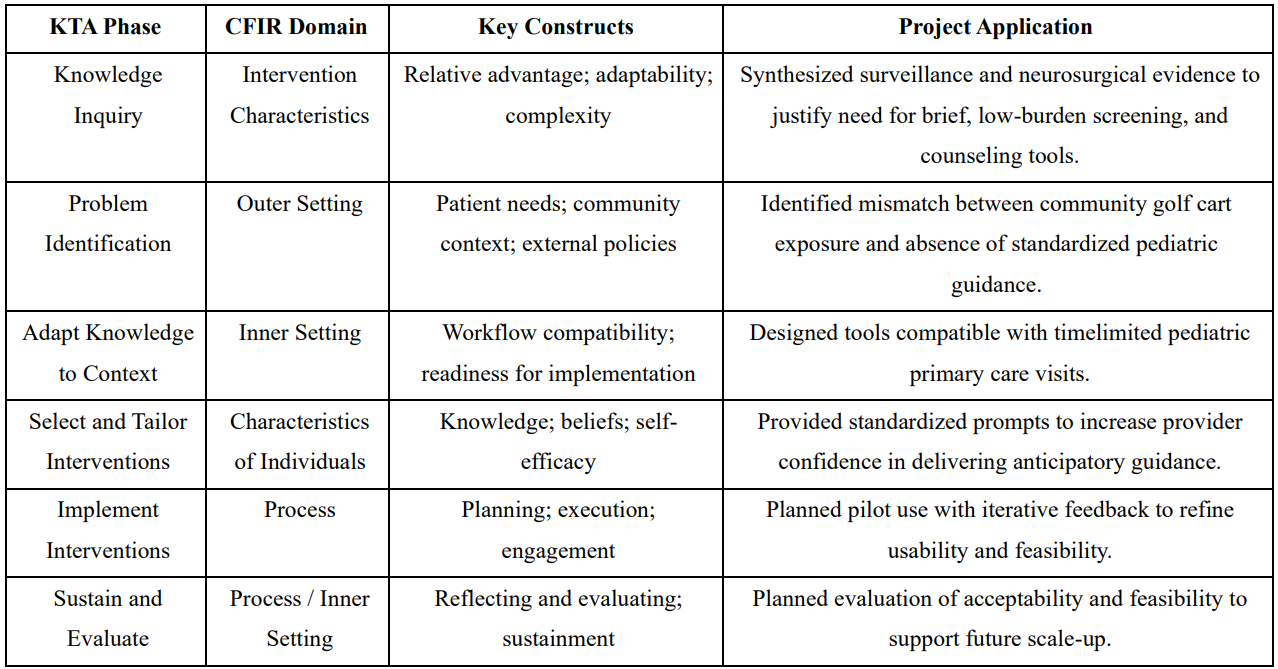
Table 1. KTA–CFIR Crosswalk for Toolkit Development and Implementation
Knowledge-to-Action (KTA) action cycle demonstrating translation of evidence into a pediatric golf cart injury prevention toolkit. The cycle highlights identification of the knowledge-to-practice gap, adaptation through screening and brief counseling, and planned strategies for monitoring, evaluation, and sustainment supported by electronic health record prompts and caregiver education.
Instrument Development and Validation
Item generation for the Golf Cart Use and Safety Screening Checklist was informed by epidemiologic and trauma literature identifying modifiable risk factors associated with pediatric golf cart injuries, including seating position, restraint use, driver age, supervision, hard cornering behaviors, and prior injury history [7-9]. Ten core items were developed to identify exposure, frequency of use, seating behavior, restraint, and helmet use, driving practices, history of falls or injuries, household rules, and caregiver knowledge gaps (Appendix A).
Response formats were intentionally limited to dichotomous and categorical options to support rapid completion, ease of interpretation, and reduced cognitive burden in busy clinical settings, which is consistent with recommendations for creation of practical clinical tools [16]. The checklist functions as a trigger-based instrument where any highrisk response prompts delivery of standardized anticipatory guidance. Formal content validation using expert review and
Content Validity Index procedures is planned during pilot testing, consistent with contemporary instrument development standards [16,20].
The accompanying provider counseling script and parent handout were co-developed to ensure alignment between screening and intervention. Counseling content reflects prevention strategies supported in the literature, including consistent seat belt use, avoidance of sharp turns and night-time operation, supervision by licensed drivers only, and early recognition of concussion symptoms [11,12]. Community and policy-level considerations—such as local rules and signage—were intentionally incorporated to reinforce upstream safety messaging. (Appendix B and C).
Analysis & Planned Evaluation
The planned evaluation is aligned with the monitoring and evaluation phases of the KTA action cycle. It specifically emphasizes the implementation‑relevant indicators during the initial stages of the toolkit’s deployment in the clinical setting. The primary outcomes will include screening completion rates, counseling fidelity, caregiver handout distribution, and documentation consistency. Descriptive statistics and run charts will be used to assess uptake and sustainability over time [21].
Provider acceptability and feasibility will be assessed using brief surveys and structured feedback. Qualitative data will undergo directed content analysis guided by implementation science constructs to identify contextual barriers and facilitators influencing adoption of the toolkit [19,22]. Findings from this evaluation will inform ongoing refinement of the toolkit and support future integration with community‑based injury prevention initiatives to reduce the pediatric injury burden [13].
Discussion
The number of golf carts used for vacation, neighbourhood travel, beach and resort towns, university tours and sporting events have increased in recent years. Naturally, children accompany their parents at many of these events. Golf carts do not have proper restraint devices for children, and the risk of ejection often is underrecognized amongst the public. Children are 1.5 times more likely to be injured from golf cart ejection than adults [3]. Ejection leads to neck and head injuries, and these injuries can be severe. Whether the child is the driver of the golf cart or not, the risk of injury can’t be discounted or ignored. There is growth in evidence that upholds golf carts as a significant source of trauma and morbidity in children and this evidence can’t be discounted [10,23,24]. The data collated by these authors includes studies wherein over fifty percent of children injured required hospitalization and ¼ of those children admitted to intensive care. Injuries commonly include skull fractures, intracranial hemorrhage, and cerebral contusion [3,7,24]. Traumatic brain injuries are three times more likely to occur in children than adults who are involved in golf cart incidents. Despite this increased occurrence, awareness of the golf cart risk lags in the general population. The American Academy of Pediatrics (AAP) [25] has provided suggestions but made no formal recommendations surrounding golf cart use and children [8].
Traditionally, all-terrain vehicles (ATV) are considered adventurous, even dangerous. The AAP suggested children under the age of six do not ride in golf carts and have extended the ATV recommendations to include golf carts. However, despite this, the use of seatbelts and safety protocols is rare. The primary care medical home is ideally poised to identify then educate caregivers of children who are at risk. Our toolkit allows for succinct, timely screening, appropriate recommendations, and ongoing counseling.
Conclusion
This practice initiative raises awareness of the risk of pediatric TBI associated with children riding in or driving golf carts. The authors synthesized results of recent studies and developed a toolkit including development of a screening tool, counseling prompts, and a caregiver-focused pamphlet. Further work will encompass distribution of educational materials and a broader dissemination through local pediatric primary care practices and integration into a regional children’s healthcare network. The results of implementation of the toolkit will be submitted for publication in the near future.
Conflict of Interest: We do not have any conflicts to disclose.
References
- Watson DS., Mehan TJ., Smith GA., McKenzie LB. Golf cart–related injuries in the United States. American Journ of Prev Med. 2008;35(1):55–59. [PubMed.]
- Ebert M. Pediatric golf cart injuries rise, with younger children most affected. Contemp Pediatr. 2025. [Ref.]
- Horvath KZ., McAdams RJ., Roberts KJ., Zhu M., McKenzie LB. Fun ride or risky transport: Golf cart–related injuries treated in U.S. emergency departments from 2007 through 2017. J Saf Res. 2020:75:1–7. [PubMed.]
- Marchioli M., Malige A., Wessner E., Talwar D., Gohel S., et al. Nationwide injury trends due to motorized golf carts among the pediatric population: An observational study of the NEISS database from 2010–2019. Pediatrics. 2022;149(Suppl 1):129. [Ref.]
- Black LI., Zablotsky B. Concussions and brain injuries in children: United States, 2020. NCHS Data Brief. 2021 Dec;423:1-8. [PubMed.]
- Centers for Disease Control and Prevention. Traumatic brain injury & concussion: Data statistics. U.S. Department of Health and Human Services. 2024. [Ref.]
- Starnes JR., Unni P., Fathy CA., Harms KA., Payne SR., et al. Characterization of pediatric golf cart injuries to guide injury prevention efforts. Am J Emerg Med. 2018;36:1049–1052. [PubMed.]
- Tracy BM., Miller K., Thompson A., Cooke–Barber J., Bloodworth P., et al. Pediatric golf cart trauma: Not par for the course. J Pediatr Surg. 2020;55(3):451–455. [PubMed.]
- Sincavage J., & Nance ML. Putting the golf cart before the horse: Pediatric head trauma outpaces education and safety regulations. Trauma Surg Acute Care Open. 2024;9:e001481. [PubMed.]
- Torres–Urquia A., De Jesus O. Golf cart–related neurosurgical injuries. Surg Neurol Int. 2024;15:222. [PubMed.]
- DeJesus J., Chavez C., Zou J., et al. Identifying community safety and policy–based injury prevention opportunities to reduce golf cart injuries. J Trauma Acute Care Surg. 2024;97(3):445–451. [PubMed.]
- Lau D., Esbati T., & Cusimano MD. Measures to prevent golf cart–related injuries are urgently needed. CMAJ. 2024;196(33):E1151–E1152. [Ref.]
- Pulliam K., Gardner D., Edmunds P., et al. Partnering with high–risk communities to successfully reduce pediatric injury over time. J Pediatr Surg. 2023 58. 1506–1511. [PubMed.]
- Graham ID., Logan J., Harrison MB., Straus SE., Tetroe J., et al. Lost in knowledge translation: Time for a map? J Contin Educ Health Prof. 2006;26(1):13–24. [PubMed.]
- Boateng GO., Neilands TB., Frongillo EA., Melgar–Quinonez HR., Young SL. Best practices for developing and validating scales for health, social, and behavioral research. Front Public Health. 2018;6:149. [Ref.]
- Flanagan JM., & Beck CT. Polit & Beck’s nursing research: Generating and assessing evidence for nursing practice (12th ed). Philadelphia (PA): Wolters Kluwer; 2024. [Ref.]
- Field B., Booth A., Ilott I., Gerrish K. Using the knowledge to action framework in practice: A citation analysis and systematic review. Implement Sci. 2014;9:172. [PubMed.]
- Straus SE., Tetroe J., Graham ID. (Eds.). Knowledge translation in health care: Moving from evidence to practice (2nd ed.). Chichester (UK): Wiley–Blackwell. 2013. [Ref.]
- Damschroder LJ., Reardon CM., Widerquist MAO., Lowery J. The updated Consolidated Framework for Implementation Research based on user feedback. Implement Sci. 2022;17:75. [PubMed.]
- Lynn MR. Determination and quantification of content validity. Nurs Res. 198;35(6):382–385. [PubMed.]
- Perla RJ., Provost LP., & Murray SK. The run chart: A simple analytical tool for learning from variation in healthcare processes. BMJ Qual Saf. 2011;20:46–51. [PubMed.]
- Proctor E., Silmere H., Raghavan R., et al. Outcomes for implementation research: Conceptual distinctions, measurement challenges, and research agenda. Adm Policy Ment Health. 2011;38(2):65–76. [PubMed.]
- Boggs K., Wortham AT., Gregoski MJ., Pruitt CM., McDuffie LA. Pediatric Golf Cart Injuries and Morbidity: A Single-Center Trauma Experience. Pediatr Emerg Care. 2025;41:383–387. [PubMed.]
- Chang HL., Yorkgitis BK., Armstrong LB., et al. Golf cart injuries have similar severity to all–terrain vehicle injuries in children: A multicenter comparison over a 5–year period. Trauma Surg Acute Care Open. 9(1):e001286–2024. [PubMed.]
- American Academy of Pediatrics. Pediatric golf cart injuries on the rise. 2025. [Ref.]
Appendices
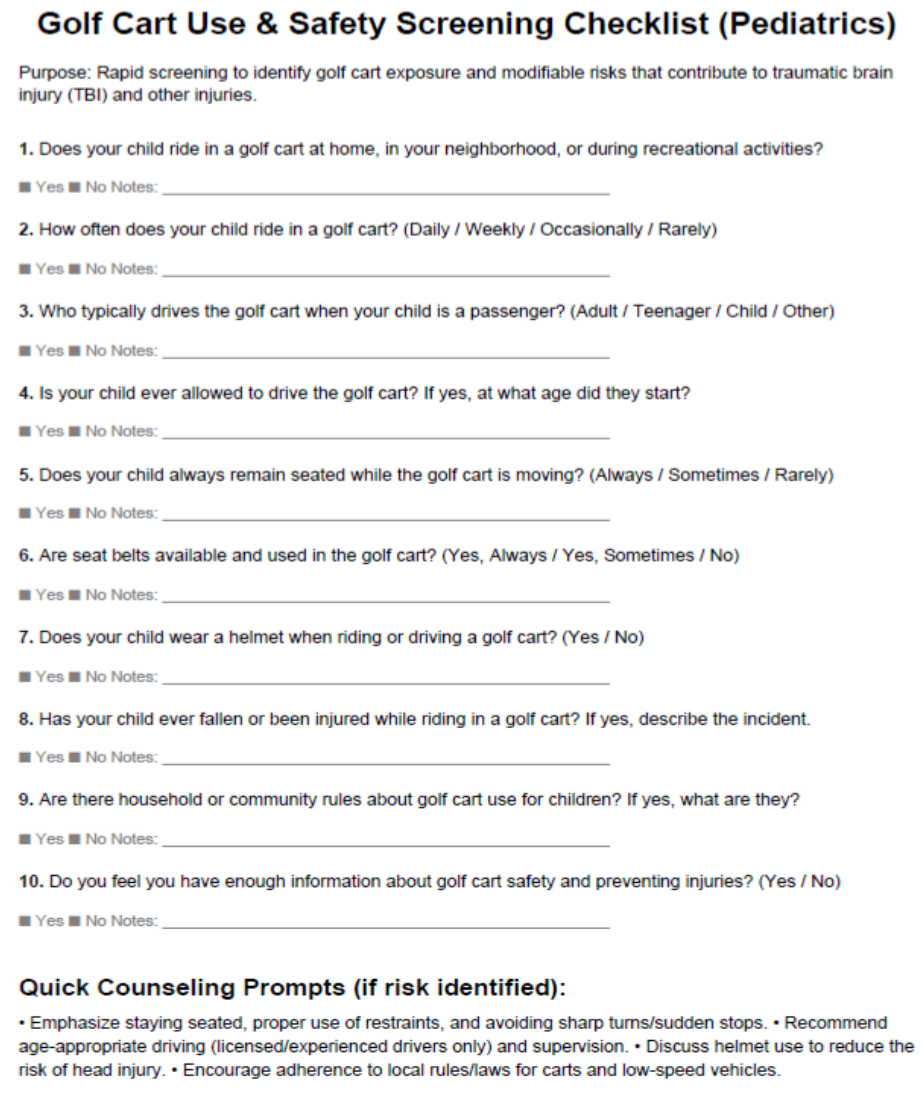
Appendix A. Golf Cart Use and Safety Screening Checklist
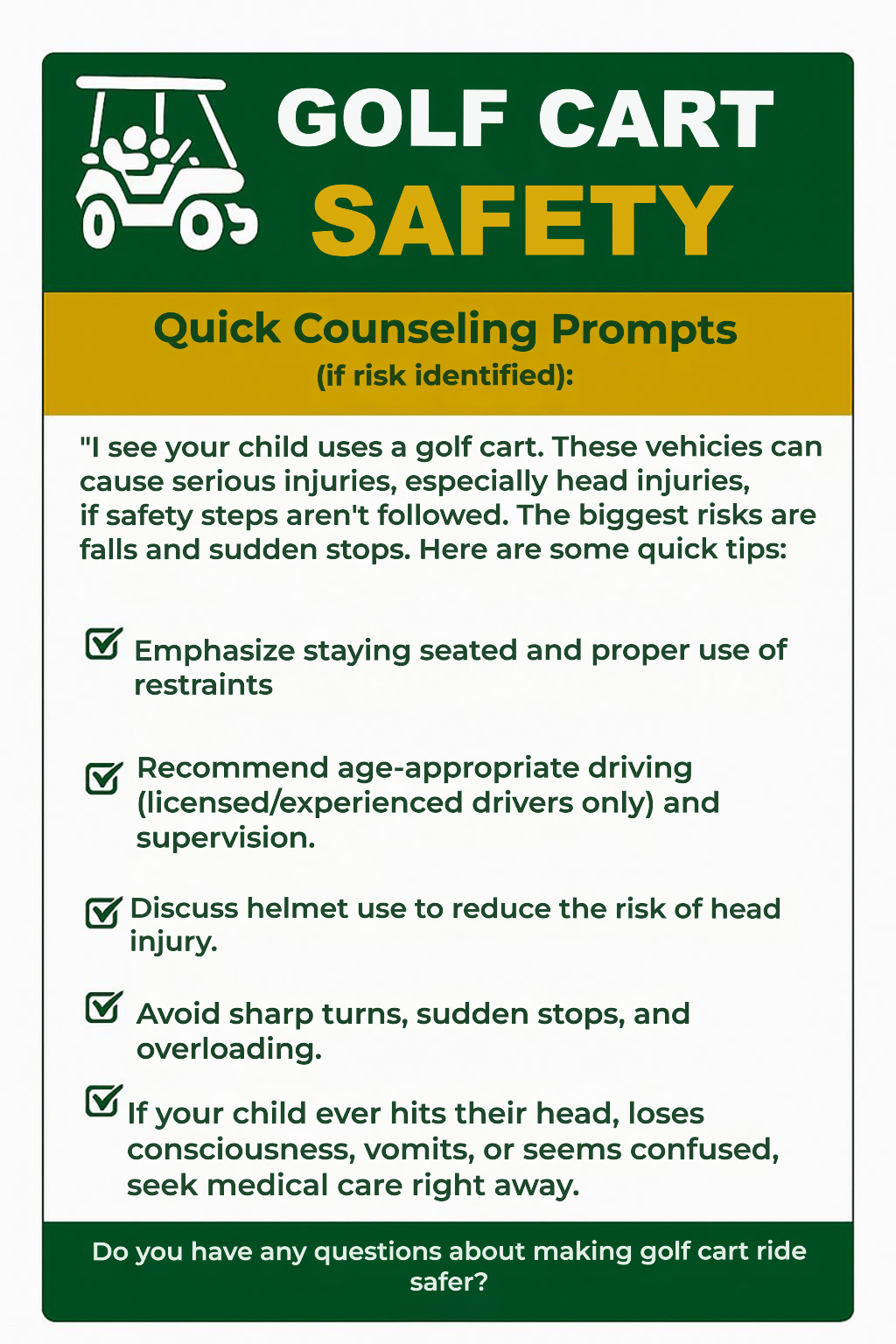
Appendix B. Golf Cart Safety - Provider Counseling Prompts
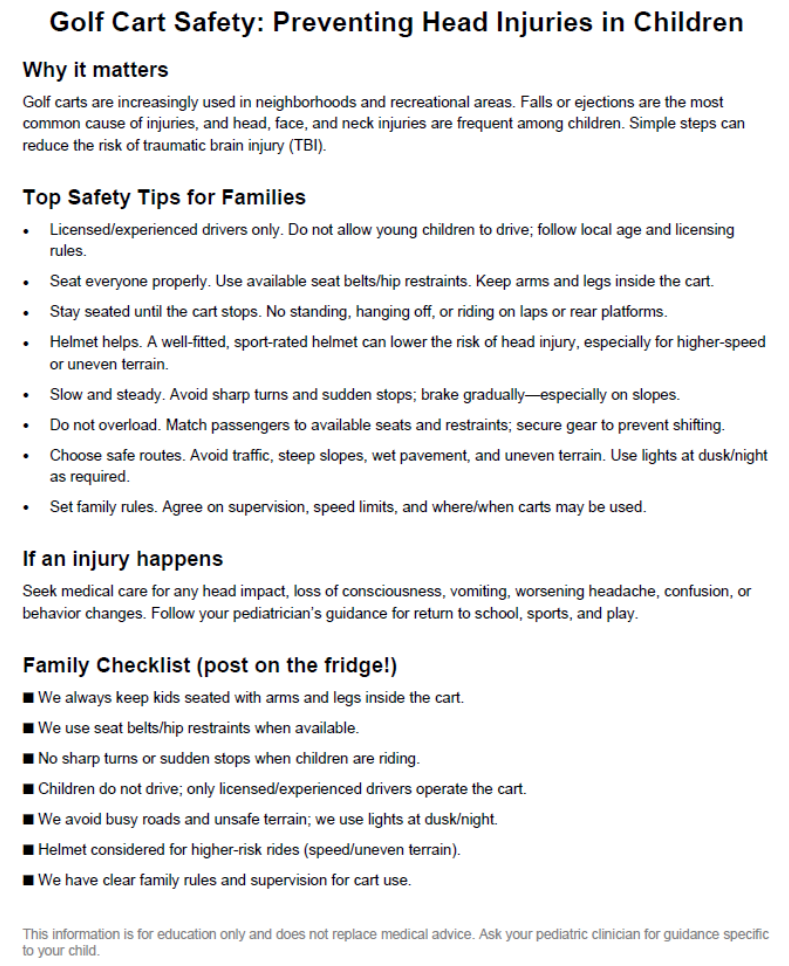
Appendix C. Golf Cart Safety - Parent Handout